
Theme: Consumer behaviour; how people decide what to buy
Thinker: Alistair Rennie & Jonny Protheroe (Google’s Market Insights Team)
Idea: Understanding the mental processes that take place in humans as they navigate the internet seeking what to buy, will ultimately help brands do better marketing. The consumer’s decision-making process, which existed as an area of study long before the internet, has lately been made even more complex with acceleration in online shopping (thanks to Amazon… and COVID-19, for example) and the general overflowing abundance of the web.
TL;DR: No one really has a 100% clear, fool-proof clue as to how exactly people make buying decisions online or offline. Not even the almighty Google, god of the internet. However, some principles of behavioural science when applied to the online shopper, can provide useful insights:
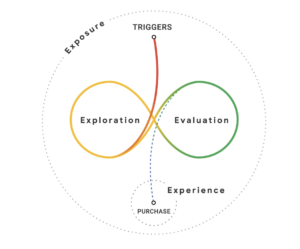
The typical customer purchase journey happens in this sequence: Trigger > Exploration > Evaluation > Purchase
The Trigger stage is where a customer is first exposed to the existence of the product, while Exploration (looking for all available options) and Evaluation (narrowing down options based on personal biases) are the two ‘mental nodes’ where most of our online activities pre-purchase fall.
6 key biases influence purchase decisions:
1. Category Heuristics (short descriptions of key features and benefits)
2. Power of Now (how quickly I can get it)
3. Social Proof (recommendations and testimonials from others)
4. Scarcity Bias (the less available, the more desirable)
5. Authority Bias (what my influencer thinks)
6. Power of Free (are they doing giveaways?)
How can marketers win in the “messy middle” of Exploration and Evaluation?
1. Ensure brand presence (i.e. be available, be visible, be seen, be loud)
2. Apply behavioural science principles (a.k.a commission some scientific research on your customer persona and use insights from there to develop marketing comms targeting your customers while they’re searching.)
3. Reduce the distance between Trigger and Purchase
4. Ensure flexibility and cross-functionality on your business teams to avoid branding, performance and comms silos. Important to integrate and have cooperation between marketing, user experience, product development and finance.