

As the world is considered topsy-turvy with Africa bearing the brunt of the damning effects of the COVID-19 pandemic and the Ukraine war, many businesses are countering the odds and counting great profit from the continent. For the struggling brands, their proprietors wonder what secrets exist that they are oblivious of, or in extreme mindlessness, what otumokpo – talisman – the successful brands apply. It is needless to laugh in Spanish as these treasured secrets will be unveiled here in their simplicity.
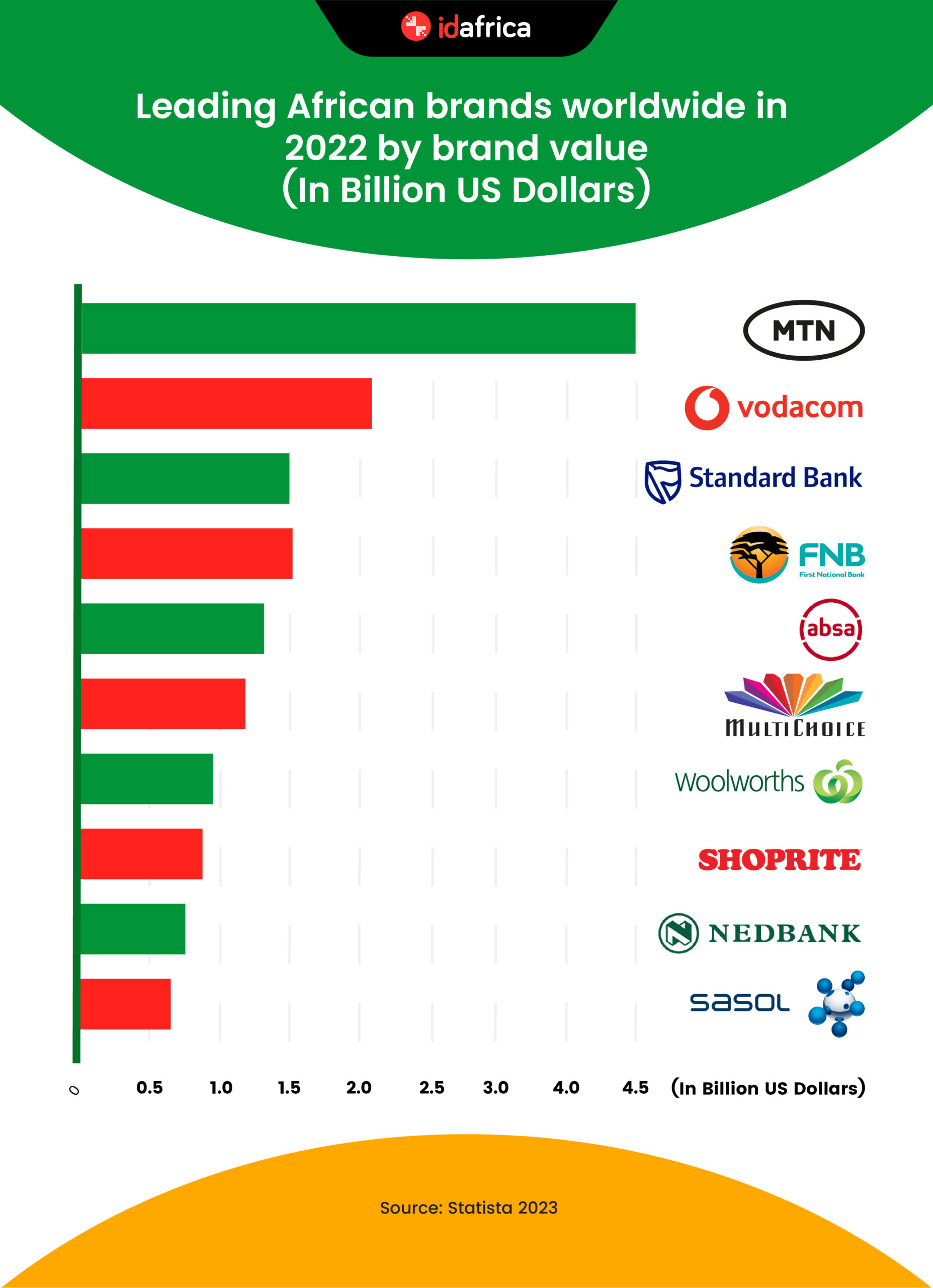
Suffice to start by establishing that African brands are giving their foreign counterparts stiff competition. Although the gap remains gully-wide, some distance has been covered. In its 2022 findings, Statista estimated the brand value of top-ten African companies at $16.12 billion. MTN, which topped the list, was the most valuable African brand, with a brand value of 4.05 billion U.S. dollars. The other brands include; Vodacom (2.02), Standard Bank (1.58), First National Bank (1.58), Absa (1.44), MultiChoice (1.19), Woolworths SA (1.17), Shoprite (1.06), Nedbank (1.02) and Sasol (1.01). Asides from being unicorns, what do these strategic brands have in common? Let’s get into it!
Audience Knowledge: Understanding the audience is not only important but is the spring that shoots a business to the heights of success or the depths of failure, as it drives effective marketing strategies, increases brand equity and ultimately improves a company’s bottom line. One thread that connects successful African brands like MultiChoice, MTN, Shoprite etc. is that they know the audience enough to determine how to convert them to loyal customers who even advocate for them.
Research is the first step to understanding the target audience. To this end, it is pertinent to realise that you cannot have everyone as your customer, thus, research helps to determine the specific demography which is most suitable, and from which you can dig the most value. While it is easy to go by gut feelings and assumptions in defining a specific target audience for a business, there is the risk of personal sentiments and biases.
Also, research is not a final destination but a process, as customer behaviour is not static. At the outset of COVID-19, markets were disrupted, as most companies were uncertain about how to reach and relate with their customers. It didn’t take long for serious brands to study the market and customers to realign their processes in the light of the digital awakening to remain relevant. Most big brands either conducted research or had PR partners provide insights which helped in retaining customers’ loyalty. Sadly, some businesses closed or continued to struggle, even within the sea of opportunities that strategic brands continue to swim in.
Clear Promise: A good brand is etched on the minds of its customers when it has a clear promise that it shows commitment to keep. Looking at the leading 10 African brands of 2022, it is apparent that they have clear promises to their audience. For example, Shoprite promises to bring the lowest prices in quality food and essential home goods to its customers. This is a clear and relatable promise that most Africans will admit is being kept. Indeed, Shoprite is considered one of the cheapest places to shop on the continent. No wonder customers throng its outlets.
Also, MultiChoice has a clear promise to entertain, inform and empower African communities that inspire and build us in return. The company matches these words with action through the remarkable work of its subsidiaries (DStv, GOtv, Showmax), as it continues to churn out phenomenal content in movies, sports, news etc. Through its innovator programme, MultiChoice regularly selects the best startups in various African countries and offers them the opportunity to pitch to international investors. So, take a second look at the brand’s promise and you will see that it is clear that there is a colossal attempt to live up to it.
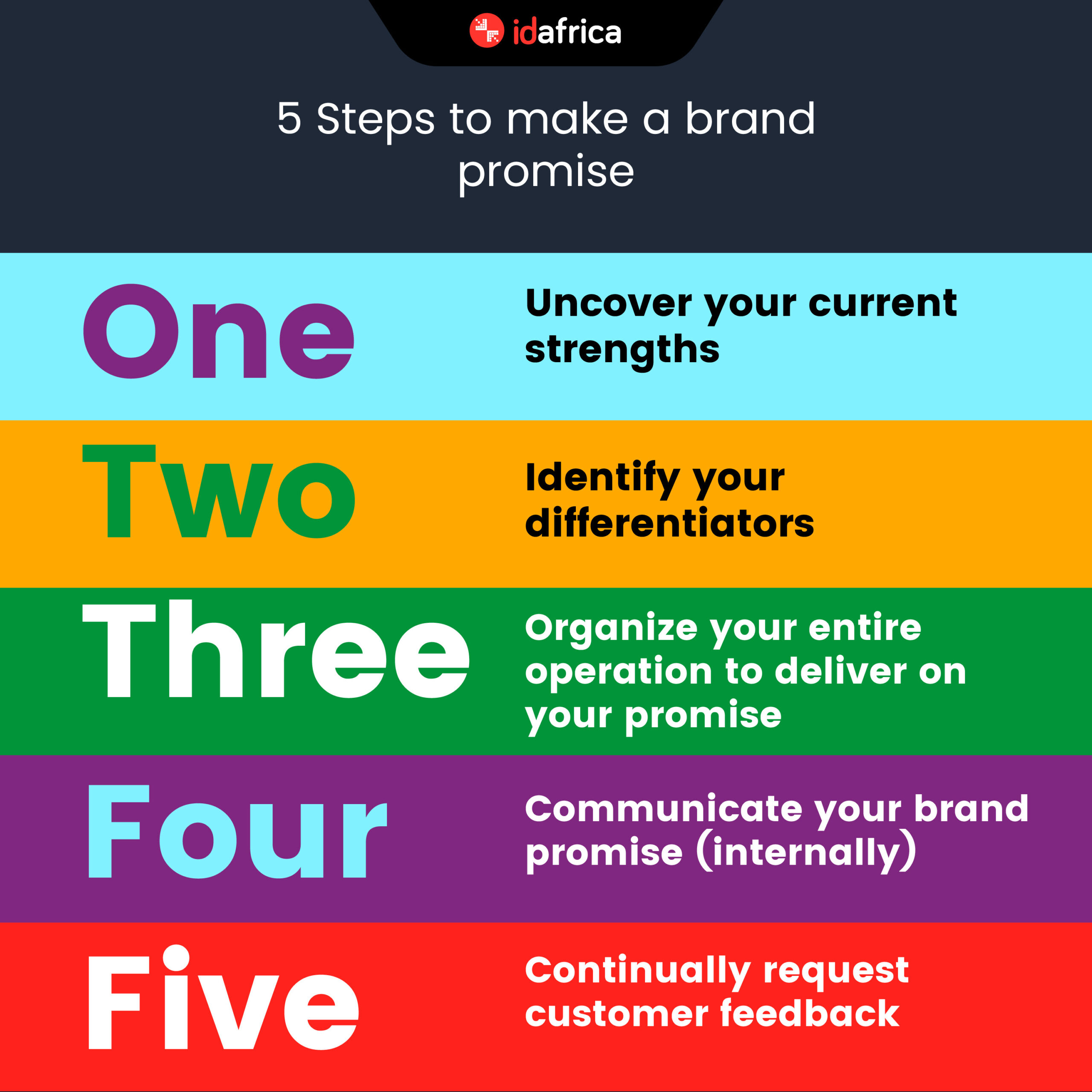
It is noteworthy that a brand promise is not a tagline or a slogan. It is not designed for public consumption. However, it is okay if it gets public. What is important is that a brand promise is designed as an internal compass for people working within the organisation. It is a constant reminder of inalienable values and targets which are critical to making the customers happy. Anne Shaw, a marketing consultant who led the marketing team for a fortune 500 brand, lists these five steps to make a brand promise which can be kept:
Unique Proposition: Competition is the natural order in business, more so in Africa which is an emerging frontier for brands, as they justle for the attention of customers. It will be right to say that customers are inundated with options to choose from. To stand out amid this crowded market, knowing the right way to position yourself and your products can mean the difference. Strategic African brands are distinguished by their unique selling propositions which highlight one thing that makes their businesses better than the competition.
Some brands embed unique propositions in their taglines. For example, MTN’s unique proposition is ‘Everywhere you go’, the same as its tagline. Simple as the message is, it stands the company out as one which occupies the unique position of being everywhere, even in remote destinations of not only the continent but the world. This simple proposition contains two basic elements which distinguish it: it is assertive but defensible and it is focused on what telecommunications customers value.
Braveen Kumar (2022) believes that, “unique proposition helps to focus your marketing strategy and influences messaging, branding, copywriting, and other marketing decisions, and influences prospective customers.”
Consistency: Like music producers make ‘one-hit wonders’, most brands can create singular moments of magic for their customers. While this brings colossal capital to the brands, it does not determine long-term relationships. Jessica Wong says, “With very few exceptions, brands today operate within a crowded marketplace, hence consumers are surrounded by marketing, advertising and branding messages.” Therefore, before they even engage with a company’s product, there would have been some consistent messaging. That consistency must then transcend to the product to build a long-term relationship.
A clear example of brand consistency in Africa is MTN. For the longest period, it maintained the ‘everywhere you go’ tagline and matched it with service delivery, as being the most widespread telecommunications provider in Africa. It is important to state that consistency helps build trust with consumers, little wonder MTN stands as Africa’s foremost telecommunications company.
Whether it is MTN, Absa or MultiChoice, it is easy to see their commonality in consistency and how it has sustained them even in dire times. Like a love relationship, consistency is a fuel that keeps the flame burning brightly.
Conclusion
African businesses are breaking new grounds and applying critical creativity and best practices in meeting the demands of customers. For an upcoming entrepreneur, the study of what strategic African brands have in common presents valuable insights that if diligently applied, will yield good results.
Robert Ekat is a Senior PR and Communications Adviser at ID Africa. He is also a poet and author of creative and academic books.