
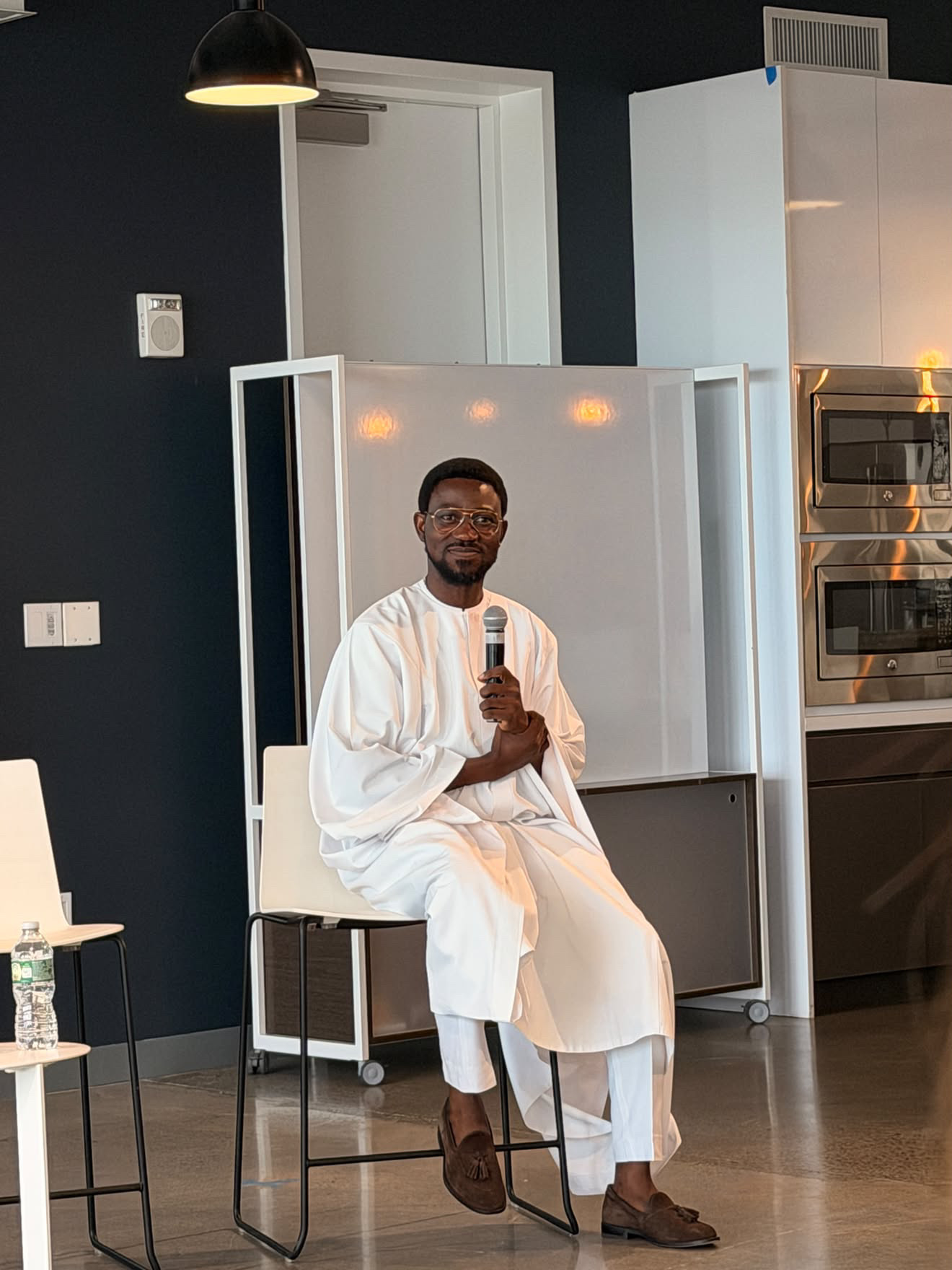
Ayeni Adekunle, CEO of BHM Holdings, said Africa’s next phase of economic growth will depend in part on its ability to build companies capable of operating at global scale. Speaking at the fourth edition of Africa Breakfast Convos (ABC) 2026 in New York, on September 25, 2026, Ayeni pointed to the possibility of building globally competitive companies out of Nigeria and across the continent, arguing that Africa’s long-term economic prospects will be shaped not only by the size of its markets, but by the businesses capable of serving them and expanding beyond them. His remarks came as business leaders, investors and policymakers gathered during UNGA81 to examine the trade, investment and partnerships shaping Africa’s position in the global economy.
“I like to look into the future and imagine what is possible if we build 10 or 20 global companies out of Nigeria,” Ayeni said. “Despite the challenges in Nigeria, South Africa, and across the continent, I choose to focus on the power of possibility. If we keep building and investing for the next 5, 10, or 20 years, the global landscape will look completely different.”
The ambition to build globally competitive African companies is already visible across sectors, from financial technology and telecommunications to consumer goods, energy and digital services. Nigerian companies such as Flutterwave, Moniepoint, Interswitch and Jumia have built operations or customer bases across multiple African markets, illustrating how businesses born in one African market can develop regional and international reach. The emergence of these companies also points to a broader question for the continent: whether Africa can produce a larger pipeline of businesses that move beyond regional scale to compete consistently in global markets.
That challenge is partly about access to markets. The African Continental Free Trade Area is designed to create a single market for goods and services across participating African countries, reducing barriers to intra-African trade and giving businesses a larger potential customer base. For companies trying to scale, a more integrated market could mean that growth does not have to stop at national borders, making it easier to build the revenues, talent and operating experience required to compete internationally.
The 2026 edition of Africa Breakfast Convos brought together voices from across that wider business ecosystem, including Hackim Abdul, Director of Citi’s Public Sector Group for Africa; Yasamin Alttahir, Director of Global Marketing, Communications and External Affairs at The King’s Trust International; Kayode Akintemi, Managing Director and Editor-in-Chief of News Central TV; Akunna Cook, Chief Executive Officer and Founder of Next Narrative Africa; Otunba (Dr.) Bimbola Ashiru, Chairman, Blackcod Group and Group Director, Odu’a Investment Company Limited; and Claudine Moore, Managing Director for Africa at Allison Worldwide.
Ayeni’s argument ultimately shifts the focus from whether Africa has potential to what can be built from it. Producing more companies with the scale to serve multiple African markets and compete internationally will require founders willing to build for the long term, investors willing to support that ambition and institutions that make expansion possible. For Africa’s next growth story, the measure may be less about how often the continent is described as a market of opportunity and more about how many companies are able to turn that opportunity into global businesses.