
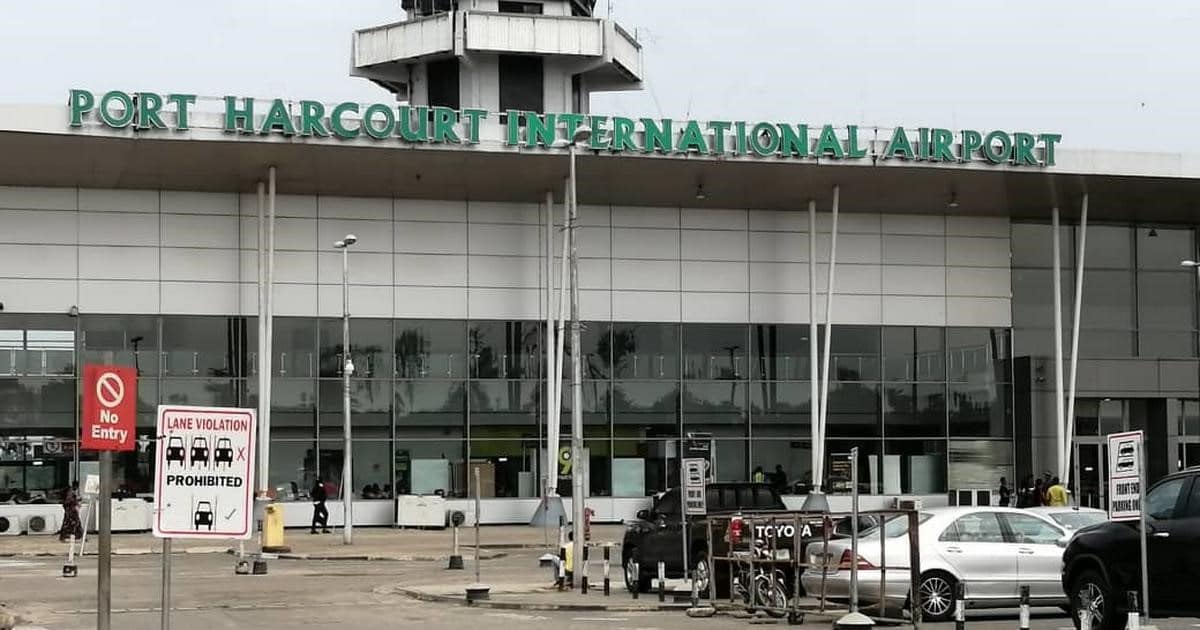
Everyone who knows me knows I am not much of a Dora the Explorer. So when I went to Port Harcourt for the first time and friends were recommending places to visit, I knew, and they knew, that I was only going to work, get enough sleep, and board the next flight home.
And by work, I mean this trip was for The Macallan Timeless Collection launch event. I was going to arrive, complete my tasks, be glamorous, and leave. That was the plan.
But as no one can survive without food and transport, certain experiences on that trip have since shifted how I perceive the city.
Port Harcourt is widely regarded as one of Nigeria’s most expensive cities, but nothing quite prepared me for what that actually looks like up close. Ride-hailing drivers are banned from picking people from the airport, which means the moment you land as a stranger, your options have already been decided for you. The cab drivers know this, so they move with a certain level of audacity that will leave you stunned. They were already stationed at the arrival stand, unbothered, quoting ₦25,000 to ₦30,000 for a 25-minute drive with the confidence of men who understood that the heavens were on their side.
The funniest and most audacious thing was when one of them said, “nobody go carry you for here o.” The laughter I burst into. I could not believe my ears.
So we got in the car, and I braced myself for the kind of suffering that would justify the number. Maybe a glimpse of third mainland bridge traffic or an equivalent of the regular Oshodi-Ikeja traffic. You know, something to justify the pricing. Instead we were met with a free road, basically Akin Adesola energy.
In my head, I kept questioning what might have warranted the cost. The car? I won’t lie, it was a nice ride, but maybe that’s because I’m conditioned by Lagos’ dysfunction, anything beyond a raggedy Toyota Camry that looks like it’s been through floods, triggers my inner alarm system. By the time we pulled up to J Signature, where The Macallan event was holding, I had to vent to someone. So, I called my friend Chinatu immediately. “Your people have robbed me.” He laughed and said we should have just walked out of the airport and flagged something down. And maybe he was right, but I am not one to battle with the Lord, and I was not about to be stranded on a road in an unfamiliar city testing my luck.
Anyways, we survived all of that. Yes, survived, and I’m not being dramatic. Because then we wanted to grab lunch before checking in, and the same logic reappeared. Apparently, it’s a well known fact that ride hailing app prices are merely a suggestion and drivers will subject you to several minutes of renegotiation. As I was not in the mood for unnecessary yarns, like always, we ended up paying N3,000 for a trip that was about N1,500 on the app and was like 5 minutes away from the hotel.
When we asked why, the driver launched into the usual price hike, hardship, and then, the Tinubu-related complaints. Then the driver now sprinkled some your brother is president jokes that I never find funny. I’m Yoruba doesn’t mean I like the man, love his principles and swear by them. Please, let’s ‘ronu’ o
But here’s what stayed with me, beyond the frustration. I had come to Port Harcourt to attend a luxury whisky event. I was not arriving in rags. And from the moment I landed, before I had said or done anything, the city had already taken one look and decided what I was worth charging. That is the billing culture, and it is not unique to Port Harcourt. Any sign of okayness. Whether it’s a decent outfit, a slight confidence in your step or the absence of visible suffering, you become a figure to be priced according to someone else’s conscience, which is usually, non-existent.
The thing that unsettles me is not even the overcharging itself, It’s how normalised the renegotiation has become. With everyone, it was a matter of fact and not one you could talk your way out of. Yes, I paid, there wasn’t an alternative and I’m not too keen on exploring new areas. The entire system was arranged around that fact.
The food, at least, was where the trip really got its redemptive arc. We spent roughly ₦16,000 and the portions were so generous that I started to feel like I was being punked. This is not the last supper. Why? I ordered Ofada rice and sauce and it carried me through three more meals across the rest of the day and into the next morning. PH, for that, thank you o.
I had always thought of Port Harcourt as another Lagos. What I didn’t account for was that Lagos, for all its chaos, is at least a city I know how to move through. I know when someone is trying to be smart with me. In Port Harcourt I was new, and that came at a cost. The transportation was ludicrous, the meals were great, the event was beautiful. But what I keep returning to is how seamlessly the exploitation was woven into that experience.