When the Central Bank of Nigeria began spreading word on cashless economy – to encourage more electronic transactions (through online payment gateways, transfers, mobile, etc.) – many did not think it possible. Consequently, we have mocked the policy, but as the days go by, we find ourselves making more electronic payments than cash payments.
Constant ATM cash troubles have driven buyers to embrace web-based methods more. The growth of e-commerce has also helped to evolve new payment gateways and methods for e-businesses and online retailers. This seems to be a threat to the future of cash transactions on ATMs.
Here are 4 of the most prominent e-transaction platforms provided by 3 of the world’s biggest tech firms are:
- Google Wallet
For those who have to deal with bulk of numerous credit and debit cards, gift cards, coupons and loyalty cards, Google Wallet – which was launched in 2011 – was made to make life easier. Google Wallet takes your payment cards and puts them all in one place – your mobile phone.
- Apple Pay
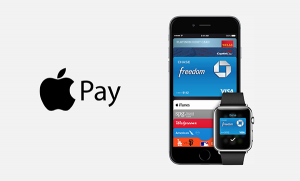
Apple Pay lets you put all of your credit and debit cards on your phone and make payments online and in stores. Apple Pay, which is currently making waves in the Unites States, is compatible with the iPhone 6 and iPhone 6 plus for in-store purchases. For in-app purchases, iPhone 6, iPhone 6 Plus, iPad Air 2, and iPad mini 3 , because of the presence of a Touch ID sensor. It even works with the new Apple Watch. How cool is that?
- Facebook Mobile Payment
Everyone knows Facebook has plans to rule the world, right?
Facebook Mobile Payment would work with its new Messenger which will allow transfers between friends.
- Android Pay
Android Pay is another web payment system from Google. Apparently, Android Pay is the equivalent of Apple Pay. Google intends to use Android Pay to get back the market Google Wallet has lost because of Apple Pay. Android Pay will be launched in May 2015 to all Android users.