
No one can give one reason why Nigerian Jollof Rice is always on the top list of Nigerian Owambe parties. Maybe it’s the firewood taste; maybe it’s a Nigerian party tradition; maybe it’s the colour; maybe it’s the look and taste.
Whatever it is, we just know that if you don’t have Jollof rice at your party, you are a mess up fella!
According to Vanguard, Jollof Rice originated from somewhere between Senegal and Gambia:
The origin of Jollof Rice is traceable to the Jollof tribe in the Senegambia region of West Africa. The traditional ingredients are rice, fresh tomatoes, tomato paste, onion, salt, and chili pepper. Other ingredients such as fish, vegetables, meats, ginger and other spices can be added to enhance the taste.
Some white people have tried to mess with our Jollof Rice, but trust Nigerians – not in this world. See BBC’s comment on Oliver’s Jollof Rice:
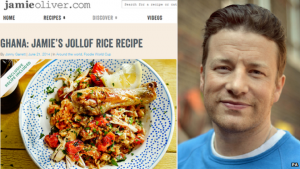
If there’s one thing West Africans don’t want you messing with, it’s their Jollof rice. Or at least that’s how it seems from the online reaction to Jamie Oliver’s recipe for the dish.
His recipe was posted in June and went largely unnoticed for months – until this week. The reaction from Africans began with dozens of comments posted on the chef’s website in the past week. The conversation then moved on to social media where it escalated. The Oliver recipe has attracted 4,500 comments, a large number of them seemingly from Africans – and many outraged at what they say are changes Oliver has made to the traditional recipe. In the past 24 hours Twitter joined the debate using hashtags like #jollofgate and #jollof.
Meanwhile, here are the best #WorldJollofRiceDay tweets:
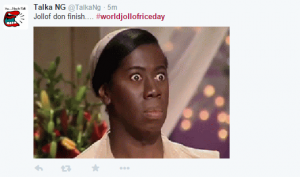




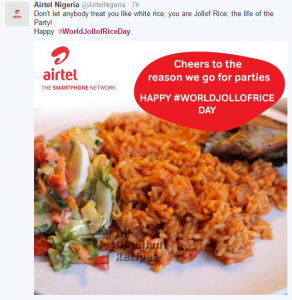


It’s a real pity if you didn’t get to eat some Jollof rice today. It tasted way better today.
Photo credit
Jollof rice – @Joostews (IG)