
By now, you must have heard that Facebook took down a photo of Bukola Saraki’s passport showing his ‘British’ citizenship posted by Sahara Reporters and threatened to delete their Facebook page. Before the Sahara Reporters announcement of the photo removal on Twitter this morning, the claim had caused a lot of ruckus on social media, especially ‘political’ Twitter (as expected).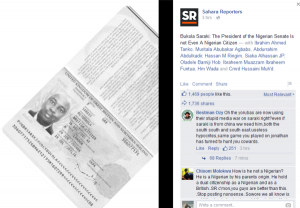
@facebook just removed Bukola Saraki UK passport removed from our page with a threat to unpublish our fanpage. What’s wrong with @facebook ?
— Sahara Reporters (@SaharaReporters) June 29, 2015
You want to know why Facebook took down Sahara Reporters’ photo? Well, here it is:
 Facebook has rules about general conduct on its platform, which many Facebook users do not know verbatim. Under its community standards, there is a section that explains how certain measures have been put in place to curb bullying and harassment of its users.
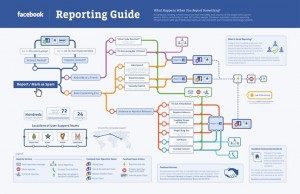
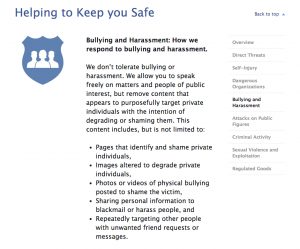 Whenever a user feels threatened or uncomfortable about information/content uploaded on Facebook about him/her or someone else, (s)he is at liberty to report to Facebook through a stated process. That’s probably what happened in Sahara Reporters’ case.
Back in 2014, Daily Mail published the story of a war hero whose leg stump photo was removed by Facebook on the claims that it was offensive to other users. The war hero lost both his legs and one of his arm after stepping on a landmine while he was on patrol. Just like Sahara Reporters’s (Bukola Saraki) photo, the war hero’s photo had been reported as offensive.
Luckily for those doing the ‘reporting’, their names are safe with Facebook. So we might never find out who did it. However, it is pivotal that we are on our best behaviours when we are on Facebook.
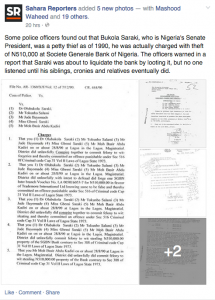
As of now, the post with the picture that claims that Bukola Saraki is not a Nigerian citizen has been taken off of Facebook. However, the post about Bukola Saraki being accused of stealing in the 90’s is still up on Sahara Reporters’ Facebook page.
 Best behaviour Sahara.
Good luck with the ‘reporters’.