
I started out as a Content Producer at ID Africa, November 2019. This was almost immediately after my one-year compulsory youth service in a dusty little law firm in Ibadan. I needed to get away from the ancient city, and so I found ID Africa.
After filling out the application on the website, I decided to still send a “Hail Mary” mail. I was at that point. I hit jackpot because Femi Falodun, ID Arica CEO saw the mail and invited me over for a chat at the BHM group office at Allen. Before I knew it, was going through the recruitment process to become an ID African.
In what I would come to realize was his typical fashion, Femi bombarded me with all the source materials, links, and helpful documents he could lay his hands on. My first task was to get familiar with as much of the materials as I could.
I wasn’t exactly sure how I would come to apply any of what I was supposed to glean from these documents, but Femi seemed confident that I had what I needed. So I tried to be confident too.
As Content Producer, my key responsibilities were to tell client brand stories and create content for ID Africa’s digital platforms. We have a number of those, so I guess my work was cut out for me.
I soon had my first taste of what was to come. I can’t remember exactly how it began, but Femi sidled to my side one afternoon and soon we were discussing Cardi B’s trip to Nigeria and how much she was enjoying Gulder.
Some backstory. It was December in Lagos. Cardi B was headlining Livespot X, what would be the biggest concert of 2019, in Nigeria. The Grammy award winning artiste was clearly having a good time. She was hitting all the best spots in Lagos and showing it all off on her social media. Nigerians were thrilled. One of the biggest artistes in the world was in Nigeria and having fun!
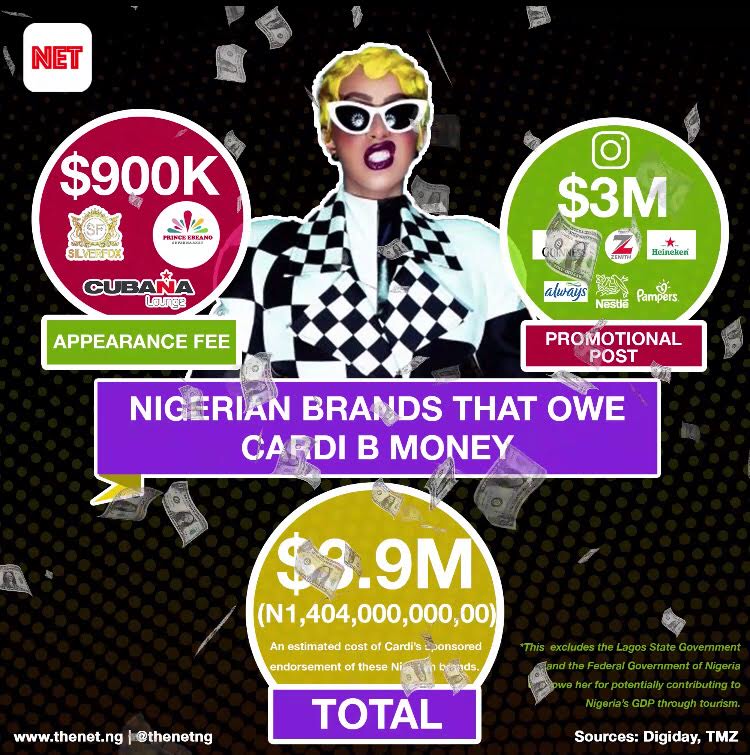
Anyway, Femi, in his usual spitballing, “off the cuff”, manner, wondered aloud what it would have cost the so many brands that Cardi had casually advertised on her social media, to actually hire her. There went my first assignment. It was titled, All The Nigerian Brands That Owe Cardi B Money.
And it was pretty exciting to work on. I had to do some research into Cardi B’s activities in Lagos, following the timeline of events, so as not to miss anyone and anything that Cardi B did while in Lagos.
After a few pointers from Femi on doing a little bit more research and including verified data and sources in the story, it was done. But it didn’t end there.
The next task was to create an infographic of my findings. I worked with in house Designer, and soon good friend, Kume Akpubi on this. (Fun fact, Kume and I resumed only a week apart and as the two new people in the office, we became fast friends.)
After a few stabs at the infographic, Femi was satisfied. We were in business.
From then on till December 2020, when I left the Editorial team to join the PR & Communications team, I had written over 50 profiles and articles, roughly one per week. Here are some insights I gleaned from the experience.
Do Start
I suffer from inertia, and I often overthink. Many times this leaves me “paralysed”. Often unable to just put pen to paper and begin work on an article. “Start” might seem like redundant advice, but I think it is the most important.
After speaking with a few of my colleagues on the Editorial team, one thing we all had in common as the most difficult part of writing, was starting.
I might stall on starting because I don’t have a clear direction for an article. Or I haven’t done enough research on the topic, or I need to speak with an expert, or interview a subject.
And starting doesn’t necessarily begin with writing. It is the mental preparation you have to go through to begin. And it is often a long road. A blank page with a blinking cursor can be pretty daunting.
I’ve found that the thing I sometimes dread the most, is also the best way of clearing my head. So put down those first few lines, you might surprise yourself. Simply deciding the night before to wake up early to begin work an article can be all the motivation I need.
Waking early to write, before meetings, mails and messages, I’ve found to be very effective to overcome my inertia.
I was in a state of inertia before I began working on Burna Boy’s profile. It turned out to be one of my favourite long reads. For a while I was unsure how to begin. After all, it was Burna Boy. A lot had already been written about him. What else did I have to add?

It was also unlikely that I would get access to Burna Boy to personally interview him and insert his voice into the story. I however knew the angle I wanted to go with the story, which made it less difficult. It turned out to be a surprisingly insightful piece into Burna’s life, and even the lives of those that came before him.
Great stories take time. And sometimes the end is not usually clear from the beginning. Don’t be in a hurry to “finish” a story. Because one thing I’ve come to realize is that you really can’t finish writing anyone’s story. You can only close a chapter.
You might be hesitant to begin because you are unsure of direction or not in the mood, or can’t feel a flow, but those first few lines might be enough to break your inertia and get you started.
Many times, the final version of the article will go through several changes and edit, but you will never get there if you don’t start.
Give Your Subject Expression
One of the resounding lessons I’ve learnt from Ayeni Adekunle, BHM Group founder who sometimes doubled as my interim Editor-in-chief, is to give expression to the subject of a story. To include their voices, and even the voices of others into the story.
To this end, the most enjoyable profiles I have had the pleasure of writing come after long conversations with the profile subjects. Before beginning to work on their profiles, I spent several minutes just bantering with my colleagues Kume Akpubi, Kingsley Ofuonye, Oladayo Olufowose, Sharon Grey and Prince Ehima.
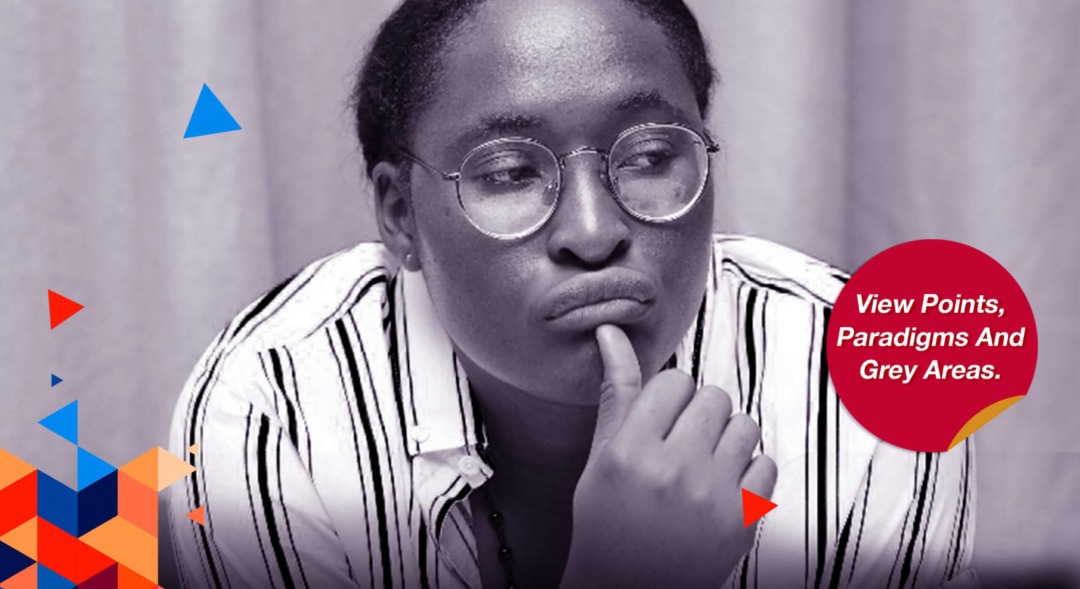
The interview was informal and laid back, but extremely enjoyable. I merely listened as these individuals let me into their lives. I had to cut Kume short at some point, because as I reminded him, I was writing a profile not his memoir.
As a writer, I’ve come to learn that I only have to help people get their stories out, as unobstructively, as possible. Every interview is different. Every interview subject is different. Some are more loquacious than others. But more than speaking and asking questions, which are important, listening patiently and actively will make all the difference in how a person chooses to tell their story.
Connect The Dots
One of my favourite parts of writing is the unexpected realizations that I find. It’s like digging for water and finding gold. It’s hard to say from the beginning, where a story is likely to end. But in the process of excavations, conversations and research, you sometimes find gems. Perhaps you might even give your interview subject insight into their own lives they had not realized earlier.
I enjoyed working with Digital Strategist, Leye Makanjuola, Creative Designer, Kayode Olowu and Producer of Nigeria’s first feature length animation, Blessing Amidu, on bringing their stories to life. They make some of my most engaging and interesting profile subjects. Their stories took unexpected turns, were rough and real. It was a pleasure.
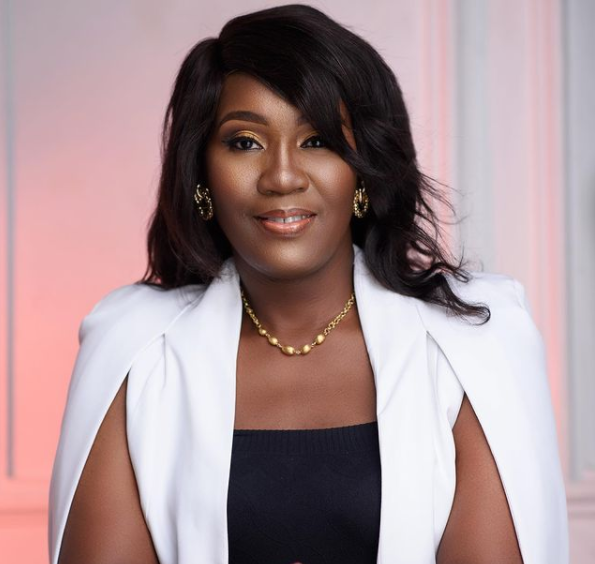
Profiling personalities and celebrities is always an experience. Ayeni Adekunle, my interim Editor-in-Chief, is a stickler for telling the story behind the stories of these individuals. Therefore profiles become an exploration into the uncharted, sometimes wild waters, that is the lives of strangers.
It is always refreshing to see the complexity of people’s lives laid bare. A reminder that everyone, everywhere, is going through it, and has gone through it. I had a good time digging into Feyikemi Abudu, Gabriel Afolayan, Folarin ‘Falz’ Falana, Mr Macaroni and Adekunle Gold’s lives. I enjoyed the stories that their lives told me.

Stories of determination, pain, hurt, growth, disappointment and success. And it is one of the joys that writing brings me. Dig deep and then connect the dots. Let the story tell itself, pay attention to what is right in front of you.
One of my favourite deep-dive investigative stories from the ID Africa editorial team is Michael Orodare’s profile of alleged famous internet hacker, Hush Puppi, as well as his experience at Late MKO Abiola’s house during the anniversary of his death.
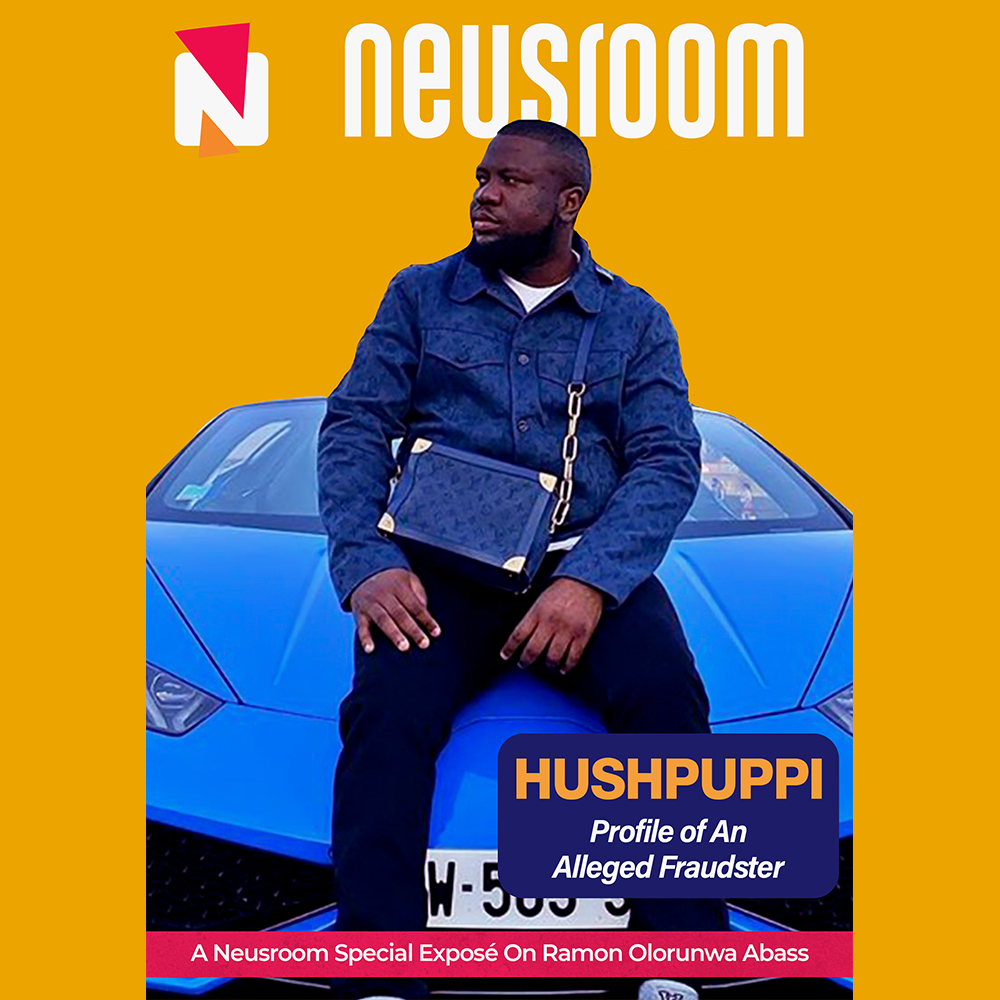
Both stories are lessons in experiential writing and the power of connecting dots through storytelling.
Sometimes, being closed off indoors, or staring at your laptop screen for hours clouds your vision. Take a nap. I especially find naps refreshing. Take a walk. Come back to the story with fresh perspective. You might be surprised by what suddenly becomes clear to you.
Use The Dictionary
Words are a resource, and they do run out. The synonym dictionary can be helpful in breaking up the monotony of words.
Using the dictionary however, is only a part of improving as a writer. Reading constantly, to renew your mind and expand your knowledge is critical. This might be difficult due to deadlines and tight work schedules but it really is the only way to survive as a career writer.
Writing can also be draining, and if you don’t take care to refill, you will soon run on empty. It’s better to refill when you’re only halfway gone, than when you are completely depleted.
Find time to read. Plan your day deliberately so that you have some time for reading and critical thinking. Take a break from non-stop writing.
Get Feedback
I usually find it difficult to self-edit. I rely on my boss Femi Falodun and my interim Editor-in-Chief Ayeni Adekunle, to see the loopholes I might have missed, and point out the errors I’ve made.
After spending hours crafting and creating, I can’t wait to turn in my final work. However, no piece of writing is complete without thorough editing.
Good editing goes beyond just correcting grammatical errors. It is often a process of questioning the accuracy, veracity or reasoning behind the work. I’ve learnt to actively seek feedback and be unafraid to defend my work.
For a long time, I avoided calling myself a writer. I believe the responsibilities that come with such a title are significant and should not be taken lightly. I still don’t call myself a writer, but maybe with more than 50 profiles under my belt, I’m on my way.
Instructive and refreshingly revealingl
Well scripted.
Very engaging and didactic.
Well done, Dara!
Oh Dara! Star girl! ⭐ 👏👏👏