
By Joshua Agbola.
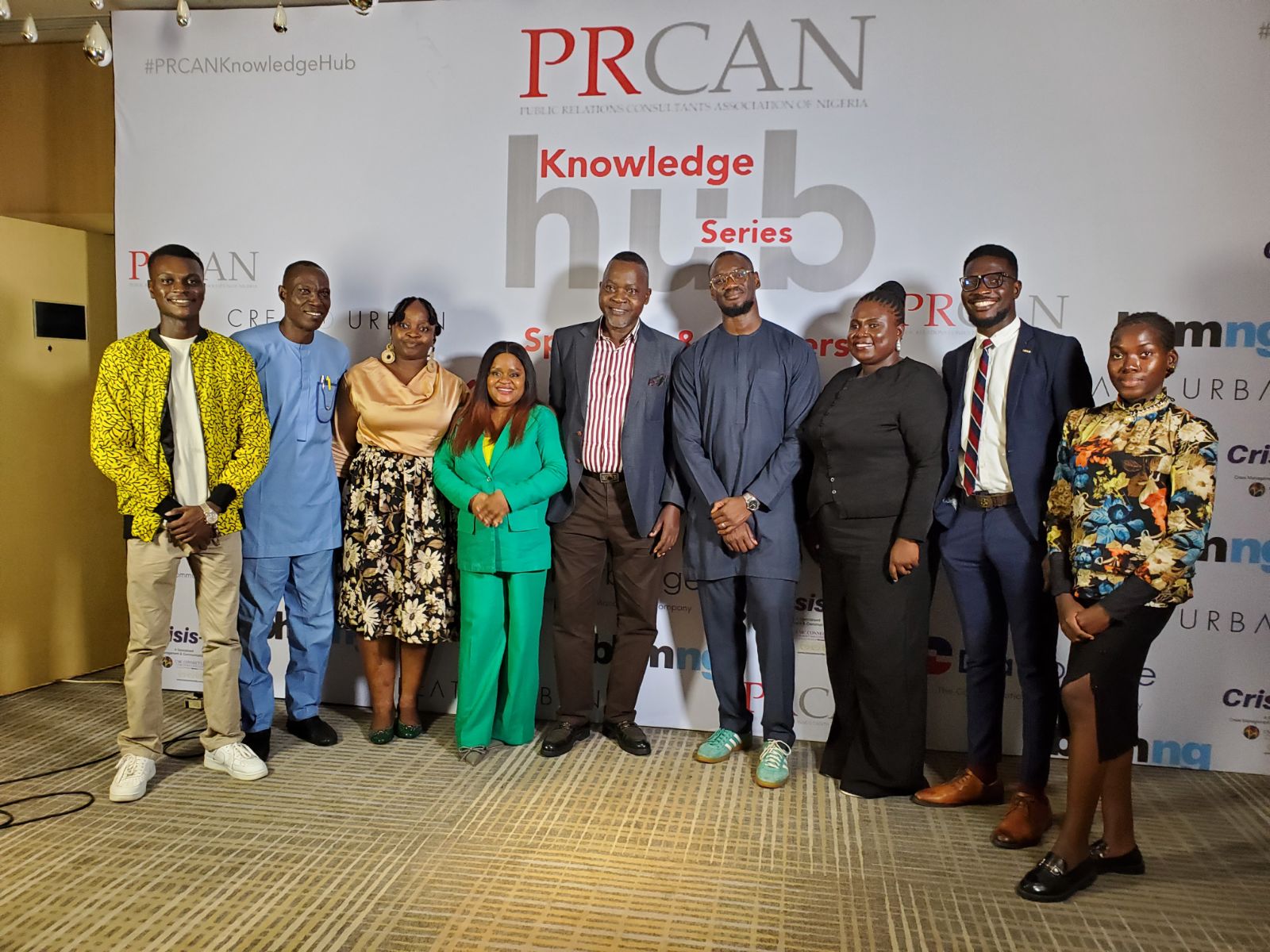
Walking into the Lagos Marriott Hotel in Ikeja for the maiden edition of the Public Relations Consultants Association of Nigeria (PRCAN) Knowledge Hub felt like stepping into a new chapter. As someone relatively new to PR, I wasn’t sure what to expect, but it quickly became clear this wasn’t going to be just another forgettable industry gathering.
From the moment PRCAN Chairlady, Mrs. Nkechi Ali-Balogun, delivered her opening address, the energy shifted. The conversations were sharp, honest, and sometimes uncomfortable. At the heart of it all was one urgent question: How fast is communication changing, and are we ready for it?
Speakers like Tomiwa Aladekomo, CEO of TechCabal, and Karl Haechler, CEO of Bursor Africa, didn’t just present ideas. They challenged us to rethink everything we thought we knew about PR in the AI era. Here are the six key takeaways that have stayed with me since that day:

- AI Is Already Reshaping Communication, Not Just a Future Trend
AI wasn’t discussed as some distant technology. It felt immediate and transformative. Tomiwa Aladekomo captured it perfectly when he said, “Those who embrace AI will go farther than those who don’t.”
The message was loud and clear: AI is already changing how information is created, distributed, and consumed. The divide between professionals who actively use it and those who ignore it is widening fast. For anyone in PR, ignoring AI is no longer an option. It’s a strategic risk.
- Communication Now Moves Faster Than Our Ability to Respond
One of the most striking insights came from how quickly narratives form online. By the time organizations prepare a response to a crisis or major event, the conversation has often already moved on, sometimes shaped inaccurately by speculation and speed.
This reality puts immense pressure on PR professionals. We must stay ahead of the curve, monitor conversations in real time, and engage thoughtfully before misinformation takes root.
- Control Over the Narrative Is No Longer Ours Alone
Karl Haechler reinforced this point from another powerful angle. Today, people no longer wait for official statements before forming opinions. Search engines, AI tools, and thousands of digital voices are shaping perceptions in real time.
Once a story breaks online, the narrative becomes a shared, multi-platform conversation. Brands and communicators must learn to participate in it rather than trying to control it from the top down.
- Traditional PR Tactics Are Being Put to the Test
It’s becoming evident that some long-standing PR methods, especially heavy reliance on press releases and purely reactive communication, are losing effectiveness in this fast-moving environment.
The new demand is for proactive listening, early detection of emerging issues, and more strategic, deliberate responses that match the speed of today’s media landscape.
- Credibility Is More Fragile Than Ever
In an era where misinformation and manipulated content spread at lightning speed, trust can evaporate before you even have a chance to respond. What used to be “good practice”, consistency, clarity, and authenticity, now feels like essential survival skills for brands and communicators alike.
- AI Should Support Human Thinking, Never Replace It
Despite the strong push toward embracing AI, both speakers were careful to draw an important line. AI is an incredibly powerful tool for speed and efficiency, but it should never replace human judgment, strategy, and ethical decision-making.
As Karl Haechler put it, AI works best as a support system. The real value still comes from the communicator’s insight, creativity, and critical thinking.
Leaving the PRCAN Knowledge Hub, one thing was crystal clear: This isn’t just about adopting a new tool called AI. It’s a fundamental shift in how communication works, and how PR professionals must evolve with it.
For those of us just starting out (and even for seasoned pros), the winners in this new era will be the ones who recognize the change early, adapt quickly, and use technology to sharpen, not replace, their human edge.