
March 2022 was another iconic Women’s month, with the year’s theme being: Breaking the bias. Considering that we are living in a generation where inclusivity is a core value we strive for, an uninformed person might wonder what kind of bias women face in the 21st century. Here is some context:
According to the World Bank’s Women, Business, and the Law 2022 report, approximately 2.4 billion women of working age do not have equal economic opportunity, and 178 countries maintain legal barriers that prevent them from fully participating in the economy. In addition, 86 countries restrict women’s access to jobs, and 95 countries do not guarantee equal pay for equal work.
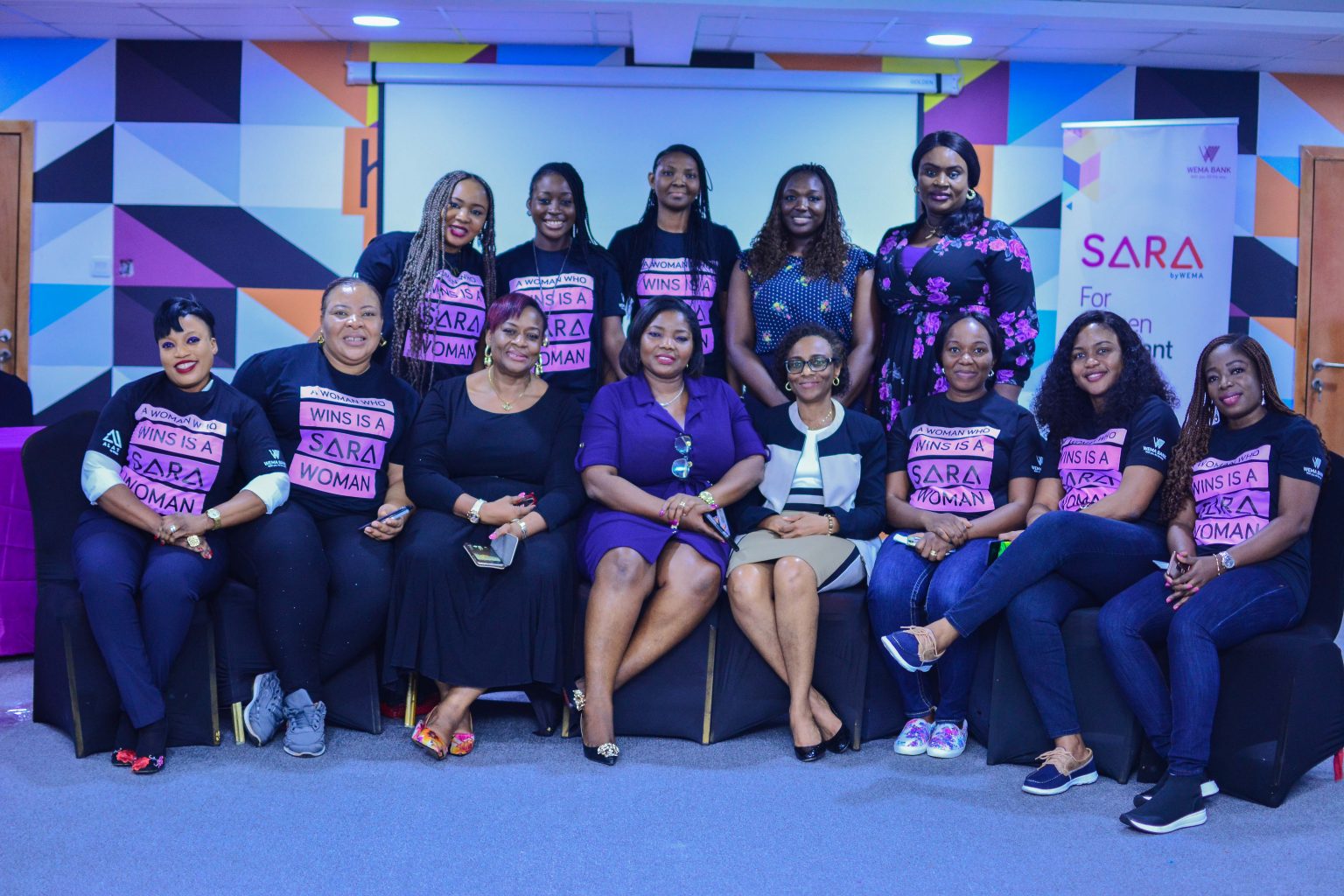
International Women’s Day ‘22
During this year’s Women’s Day celebrations, ALAT by Wema took the lead in championing the conversation about the reasons why some of these barriers persist. A Twitter space was organized with the goal of raising awareness about the gender pay gap and asking whetherxwomen in Nigeria are not being left behind. The speakers were Onike Williams a product designer, Kitan David a UX business analyst and Mayowa a UX writer.
As an experienced female in Tech, Onike Williams kicked off the session by stating that in Nigerian industries, people do not like being open about their pay, making it difficult to tell if there is a gender pay gap. According to her as a woman working in Nigeria’s bustling tech space, she had never experienced such bias in the workplace. She insisted that she has been treated fairly and with respect. However, she emphasized the need for openness in the Nigerian employment landscape.
The discussion then moved on to Kitan’s claim that the tech industry is dominated by men because women are more inclined to human relations than to technology itself. Kitan stated that there is a gender pay gap, but not necessarily in the way we perceived it. He stated that as a trainer, he discovered that men excelled at artificial intelligence and other technical courses with a 70% completion rate, mostly because it involves calculus. Whereas women excelled at product design courses and most never complete the AI/technical courses. He says this is because men do not have a good intuition for colours, whereas women are wired to.
In concluding his commentary on the issue, he maintained the opinion that providing solutions through tech is relatively new in Nigeria and by extension Africa, hence the demand for talents is high, resulting in equal employment opportunities for both men and women.
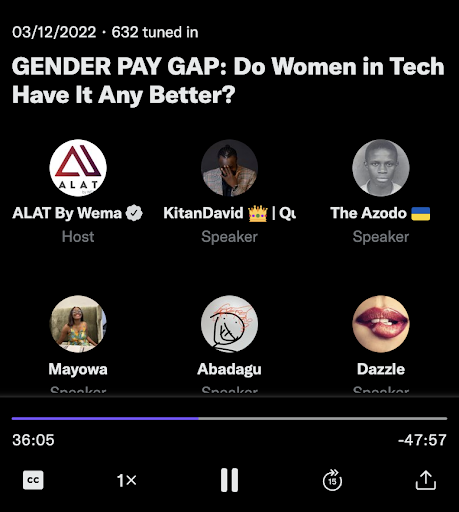 Ongoing conversation hosted by Alat by Wema
Mayowa, another experienced tech sis, also stated the need for transparency in the Tech industry, as a lack of transparency causes many newcomers to sell themselves short. She ended her commentary with ‘’It has been stated that the ability to negotiate a salary and not sell oneself short is dependent on the individual, and men appear to have an advantage when negotiating their salaries.’’
According to Pablo from the United States, men control the tech industry in his country, and women are paid less. Transparency, he believes, should be demanded by the public. Corporations in the United States already publish their pay scales. He spoke about ‘Google doc activism’, which is an online record in which people can post their job title, grade, age, employer, gender, and salary anonymously. This aids in exposing any wage disparities. He proposed that something similar be implemented in Nigeria.
As the speakers concluded, they advised that before applying for a job, extensive research should be conducted to determine the pay grade for that position. Training on negotiation, how to boost one’s self-esteem, and other such courses should also be taken in order to have a better chance and to be well-rounded. It was further agreed that the female gender should be supported and mentored in the tech industry. Also, employers were enjoined to give females more preference in order to entice them to join the tech industry – a male-dominated sector.
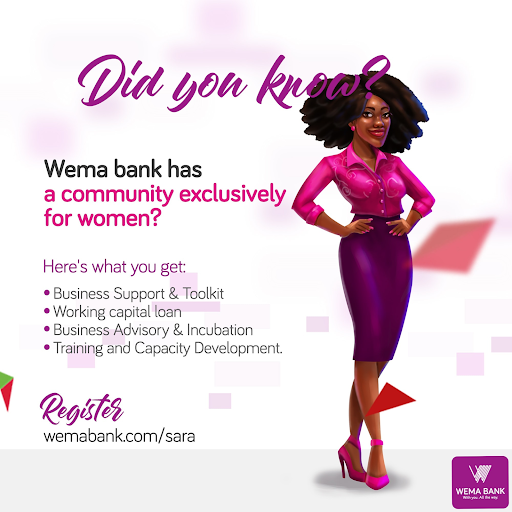
A community exclusively for women
The annual commemoration of Women’s month is an interesting conversation starter and an opportunity to create real change that affects women’s lives. But those conversations cannot occur yearly, it is important that they remain daily conversations that stir action. And there is a need to provide solutions and products that will assist in easing the way for women.
For instance, ALAT and Wema bank have launched products such as SARA which aims to help more women become financially independent by offering them single-digit loans to aid the funding of their businesses. The product also has many more amazing features, tailored to the growth of women. A website was recently launched to help connect a community of strong ambitious women.
Corporate organizations taking the lead and championing talks like this only strengthen the stance that women can and will break the bias.
- By Oluwalonimi Onipede, a PR & Comms Adviser at ID Africa
Listen to the recorded Twitter space